
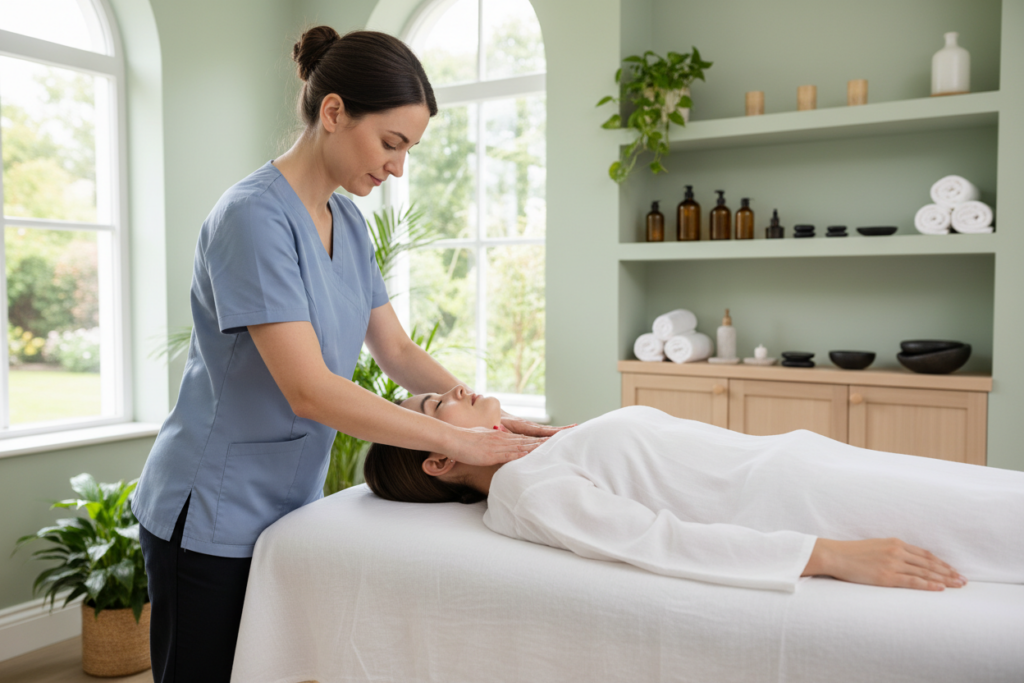
Did you know your body has twice as much lymph fluid as blood? Yet, many people don’t know about their lymphatic system. It works hard every day to keep you healthy, remove toxins, and boost your immune system.
Your lymphatic system is a network of vessels, nodes, and organs. It moves fluid through your body. It helps fight infections, keeps fluid balance, and removes waste. If it’s not working right, you might feel swollen, tired, or take longer to get better.
Manual lymphatic drainage is a soft, healing method. It uses gentle, rhythmic movements to help your body move fluid better. This supports your body’s natural healing.
We’ve seen amazing changes in Ireland, from Galway to Dublin to Cork. It’s not just a trend. It’s a medically recognized treatment that has changed lives. It helps people after surgery, with chronic conditions, or looking for natural detox.
In this guide, we’ll share stories of real clients. You’ll learn who benefits most from this therapy. You’ll also understand the science behind it and find qualified practitioners near you.
Key Takeaways
- Your lymphatic system contains twice as much fluid as your bloodstream and plays a key role in immunity and detoxification
- Manual lymphatic drainage uses gentle, specialized techniques to stimulate your body’s natural fluid movement and healing processes
- This medically recognized therapy helps people recovering from surgery, managing swelling, and seeking natural wellness solutions
- Qualified practitioners across Ireland offer evidence-based treatments that have transformed countless lives
- Understanding your lymphatic system helps you make informed decisions about your health and recovery journey
1. Understanding the Lymphatic System and Its Role in Wellness
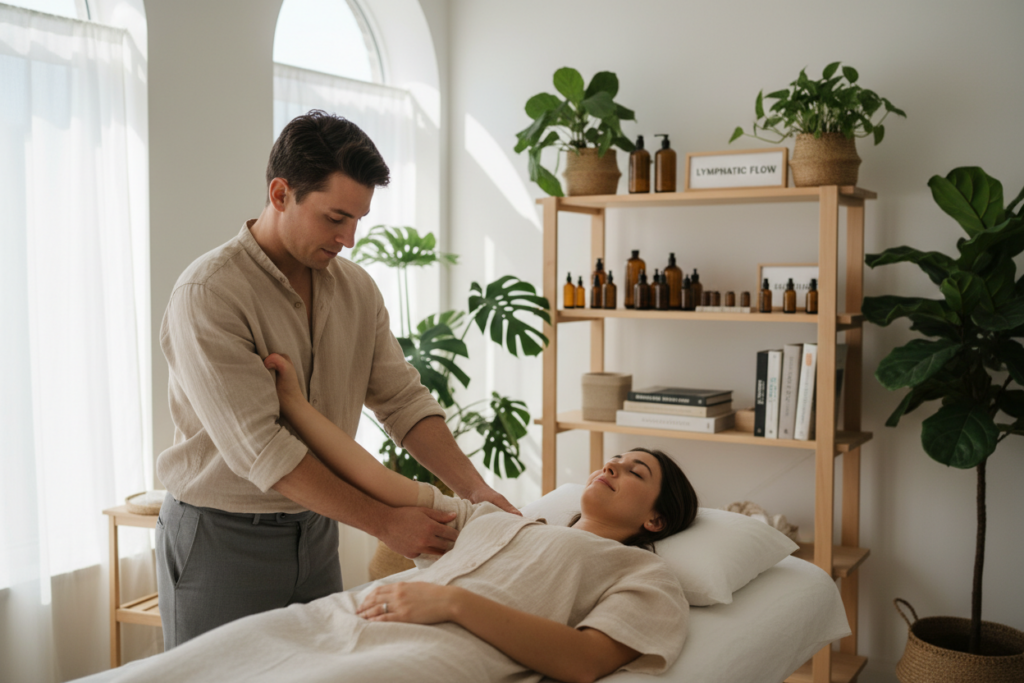
Learning about your lymphatic system is key to better health. It works quietly in your body, keeping you balanced and safe from sickness. Unlike your heart, it needs muscle contractions, breathing, and movement to work right.
Your lymphatic system is like a drainage system and a shield for your body. It keeps fluids in balance and filters out bad stuff that could harm you.
What Makes the Lymphatic System Essential for Your Health
Your lymphatic vessels help remove extra fluid from your tissues. Without them, you’d get very swollen and have too much fluid.
It has special organs that work together. Your bone marrow makes blood cells, and your thymus helps T cells grow. Your tonsils and adenoids catch germs, and your spleen cleans your blood.
Lymph massage therapy helps your body get rid of waste, proteins, and toxins better.
How Lymph Nodes Function Throughout Your Body
Lymph nodes are found in key spots like your neck, underarms, and groin. We focus on these areas during treatments.
These nodes are like sophisticated filters. They take out viruses, bacteria, and toxins from your lymph fluid. They have special white blood cells that fight off sickness.
“The lymphatic system is the body’s garbage disposal, drainage system, and immune defense all rolled into one remarkable network.”
Signs Your Lymphatic System Needs Support
Many people don’t know when their lymphatic system needs help. Signs include swelling, frequent infections, and feeling very tired.
Other signs are skin changes, feeling heavy in your arms or legs, and not getting better from small illnesses. If your lymphatic system is hurt, immune system lymphatic massage can help a lot.
If you notice these symptoms, get checked by a professional. They can see if your lymphatic system needs special care to work well again.
2. The Science Behind Manual Lymphatic Drainage
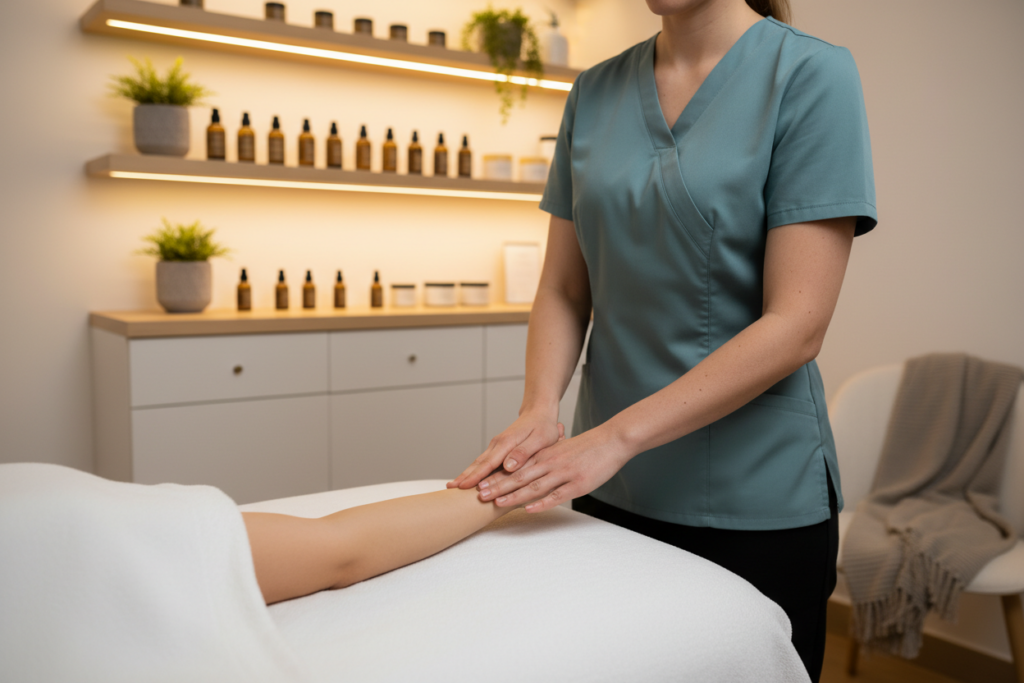
When clients first try manual lymphatic drainage, they’re amazed. They see how gentle touch can heal. We’ve studied this method for years. It’s both fascinating and very useful.
A Revolutionary Approach to Healing Touch
Our reduce swelling massage technique is different from regular massage. Regular massage uses strong pressure on muscles. But we focus on the lymphatic vessels under your skin.
The pressure we use is very light, like a nickel on your skin. Many clients are surprised by the results. We stretch your skin gently and then release it.
If you feel your muscles under our fingers, we’re using too much pressure. Our technique makes your lymphatic vessels contract. This helps fluid move to working lymph nodes.
Proven Methods We Trust and Practice
We mainly use the Vodder method, created by Dr. Emil Vodder in the 1930s. It’s the best for post-surgery lymphatic massage and managing lymphedema. It uses special motions in a certain order.
We also use other respected methods to make our treatments better:
- Foldi Method: Adds to Vodder’s work with circular hand motions and relaxation phases
- Casley-Smith Technique: Uses rotary movements with hands for moving lymph fluid
- Leduc Method: Focuses on call-and-reabsorption sequences to collect and redirect lymph fluid
We choose the best method for your condition and goals.
The Transformation Happening Beneath Your Skin
Something amazing happens during your session. Our strokes make your lymphatic vessels work better. They push lymph fluid toward working lymph nodes.
We’re teaching your lymphatic system new ways to work. We open up new paths and wake up dormant vessels.
We follow a special order in each session. We start with the central lymph nodes in your neck. Then we get ready the regional nodes and work on the affected area. This makes our work very effective.
3. Sarah’s Journey: Recovery After Breast Cancer Surgery in Galway
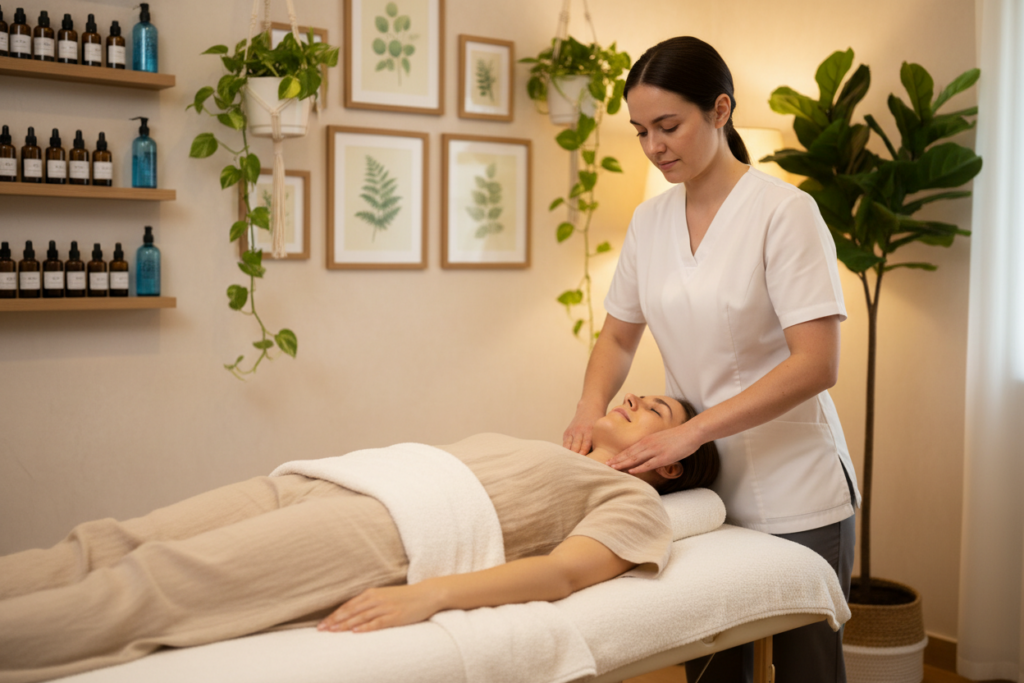
Three months after her mastectomy, Sarah visited our Galway practice. She faced big challenges that tested her strength. Her story is like many breast cancer survivors in Ireland who face new hurdles during recovery.
We want to share her journey to give hope to others on similar paths.
The Post-Surgical Challenge She Faced
Sarah was discouraged and uncomfortable after her surgery. Her right arm was swollen, and she couldn’t move her shoulder well.
She needed help brushing her hair and couldn’t reach things on high shelves. Sarah felt heavy and tight all the time. This made sleeping and doing daily tasks hard.
We knew she had secondary lymphedema. This happens in 20-40% of breast cancer patients after surgery.
Her Personalized Treatment Protocol and Timeline
We measured Sarah’s arm and checked her movement. Then, we made a special treatment plan for her. It included lymphedema massage treatment and other effective techniques.
- Five sessions a week for four weeks
- 60-minute sessions each visit
- Compression bandages between sessions
- Special exercises
- Proper skin care
- Self-massage at home
This plan covered all parts of Complete Decongestive Therapy. We taught Sarah how to keep up with her care at home.
The Remarkable Transformation We Witnessed
The changes in Sarah over the months were amazing. Our team felt moved by her progress. Her hard work in therapeutic lymph drainage paid off more than we hoped.
Measurable Swelling Reduction Results
In just two weeks, Sarah’s arm got smaller. Her forearm went down 2.3 centimeters, and her upper arm by 3.1 centimeters.
These changes made Sarah very happy. They showed her hard work was paying off.
Range of Motion and Mobility Improvements
By week six, Sarah could move her arm more. She could even raise it overhead and reach behind her back.
These small changes made a big difference in her life. She could dress herself, cook, and take care of her hair again.
Emotional Wellness and Confidence Restoration
Sarah’s emotional health also improved. She started sleeping well again for the first time in months.
She got back to activities she loved, like gardening and painting. She felt like herself again for the first time after her diagnosis.
Today, Sarah keeps up with lymphedema massage treatment monthly. She uses compression garments and takes care of herself. She inspires others who are starting their recovery journeys.
4. Who Benefits Most from Lymphatic Massage Therapy
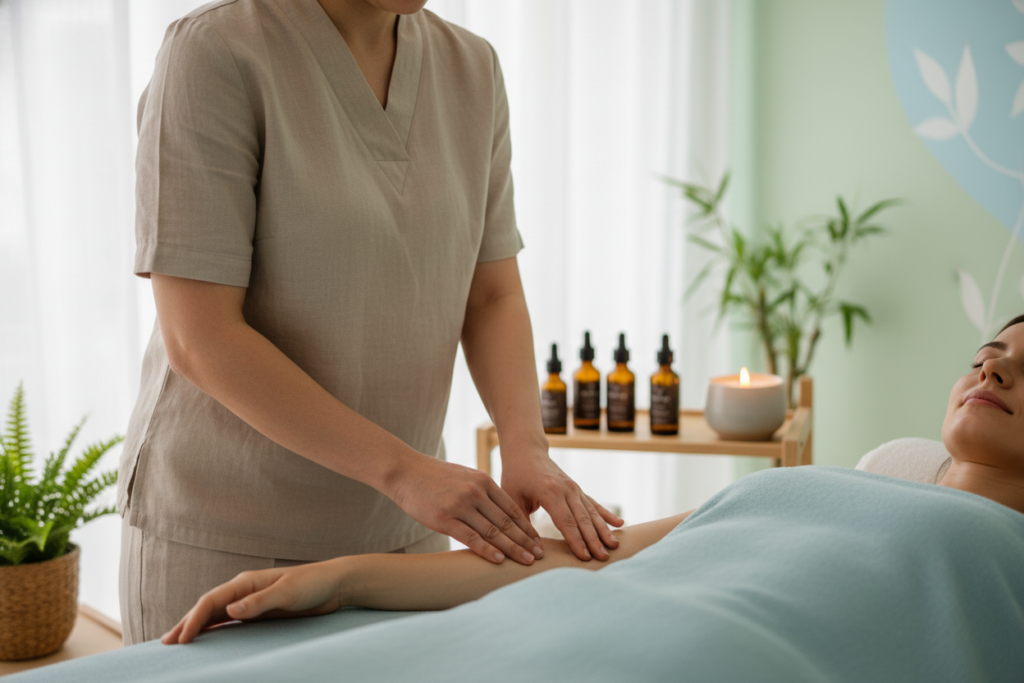
Some people find big changes with lymphatic massage therapy. We want to help them find this healing way. We know who gets the biggest benefits from it.
Knowing your health helps us see if this treatment is right for you. It’s a gentle way to help your body heal or stay well.
Post-Surgical Patients Seeking Faster Recovery
We help people recovering from surgery a lot. Those who had cancer surgeries like breast or prostate removal get a lot of help.
Cosmetic surgery patients also see big improvements. Studies show it helps after many surgeries, like liposuction or facelifts.
Orthopedic surgery patients with swelling find it helps them heal faster. Adding lymphatic drainage to their care makes a big difference.
Individuals Living with Lymphedema Diagnosis
Lymphedema is a disease where the lymph system doesn’t work right. Fluid builds up, causing swelling and skin changes.
We’ve seen big changes in people with lymphedema. Our treatment reduces swelling and improves their life.
Those Pursuing Natural Detoxification Methods
Some people choose lymphatic system detox massage for wellness. We know it helps, even if it’s not needed for everyone.
The detox massage benefits we see are better circulation and less swelling. It’s a great part of a healthy lifestyle.
People Managing Chronic Inflammation and Swelling
We’ve helped those with conditions like rheumatoid arthritis or fibromyalgia. Manual lymphatic drainage can help reduce inflammation.
People with fluid retention or chronic fatigue also get better. Athletes recovering from injuries find it helps them get back to their game faster.
Everyone we help has issues with their lymph system. We make sure we’re giving the right care for each person.
5. Lymphatic Drainage Massage Benefits We’ve Witnessed in Our Practice
In our clinic, we see big health gains every day. Lymphatic drainage therapy shows its power. It changes our clients’ health and wellbeing in amazing ways.
Immune System Enhancement and Disease Prevention
The biggest benefit we see is a stronger immune system. A good lymphatic system fights off sickness better. It makes immune cells fast and fights off threats well.
Our clients get sick less and heal faster. They feel strong and healthy again. This makes their life better every day.
Dramatic Reduction of Swelling and Fluid Retention
The most visible and immediate benefit is less swelling. This is great for people with lymphedema or after surgery.
We’ve seen limbs shrink by 30-60% in treatment. Our massage makes clothes fit again and helps move better.
Studies back what we see. Lymphatic massage can speed up blood flow in those with vein problems. It can also slow heart rate and lower blood pressure. This shows your body is relaxing.
Detoxification and Cellular Health Optimization
Lymphatic drainage helps your body get rid of waste. It’s not about being “toxic.” It’s about keeping cells healthy by removing waste.
New research shows it might help with blood sugar and hunger too. This is because it affects important hormones.
Visible Improvements in Skin Appearance and Texture
Our clients are amazed by their skin. They see less puffiness, less cellulite, and better skin tone. They also glow from better blood flow and oxygen.
They also feel better in other ways. Less headaches, better digestion, less sinus problems, and less pain. Everyone’s experience is different, but they all feel better and more alive.
6. Michael’s Experience: Managing Lymphedema in Dublin
At 34, Michael came to our Dublin clinic with a heart-wrenching story. He had been living with primary lymphedema for ten years. His legs were swollen from mid-thigh to his feet, and his skin showed signs of advanced lymphedema. We knew we had to use our comprehensive lymphedema massage treatment approach to help him.
Living with Primary Lymphedema for Ten Years
Michael’s condition had gotten worse over the years, despite trying many treatments. His legs had fibrosis, discoloration, and a “tree bark” texture. He was tired all the time because of the constant heaviness.
He also got infections in his legs that needed antibiotics often. Feeling self-conscious added to his struggles. Massage from non-specialized therapists had left him disappointed and sometimes in pain.
Finding the Right Therapeutic Lymph Drainage Approach
We worked with Michael and his doctor to start a special therapy for his legs. Our lymphedema massage treatment protocol included six weeks of intensive sessions. Each 90-minute session focused on both legs with great care.
We started by clearing lymph nodes, then worked from hips to feet. After each session, he wore special bandages. We also taught him how to take care of himself, including exercises and skin care.
His Remarkable Progress Over Six Months of Treatment
Michael’s progress over six months was amazing. It changed his life in many ways. His story inspired us all.
Reduction in Compression Garment Dependency
After four months, Michael’s treatment helped him reduce his compression level. He no longer wore garments at night or on weekends. This was a big improvement in his life.
Pain Management and Comfort Improvements
The pain in his legs got much better over time. His skin became softer and he felt more energetic. He could sleep better and enjoy his daily activities more.
Quality of Life and Daily Activity Changes
Michael started doing things he hadn’t done in years, like hiking and playing football. He even traveled without worrying. He also stopped getting infections in his legs, which saved him from antibiotics and cut down on healthcare costs.
| Progress Metric | Before Treatment | After 6 Months | Improvement |
|---|---|---|---|
| Compression Level Required | Class 3 (High) – 24/7 | Class 2 (Moderate) – Activity Only | Reduced dependency by 60% |
| Cellulitis Infections | 3-4 episodes yearly | Zero episodes in 18 months | 100% prevention success |
| Pain Level (0-10 scale) | 7-8 constant discomfort | 2-3 occasional awareness | 65% pain reduction |
| Physical Activities | Severely limited, mostly sedentary | Hiking, sports, travel resumed | Restored active lifestyle |
Michael now keeps up his progress with regular massages, wearing compression garments, and taking care of himself. His story shows how specialized lymphedema massage treatment can change lives when patients are committed and get the right support.
7. What to Expect During Your Lymphedema Massage Treatment Session
We know you want to know what happens during your lymphedema massage treatment. From the start, we make you feel welcome. We answer your questions and make sure you’re comfortable.
Each session is carefully planned to help you the most. We consider your unique needs.
This massage is different from others. It uses gentle, precise movements. We teach you about your treatment so you understand it.
The Complete Initial Assessment Process
Your first visit is more than just a chat. We spend 30-45 minutes getting to know you. We learn about your health history and symptoms.
We also take measurements and check your skin. We might take photos to track your progress. This helps us tailor your treatment.
We ask about your past surgeries and medications. We want to know about your daily life. Your comfort and modesty are our top priority.
Treatment Duration and Gentle Technique Application
Most manual lymphatic drainage sessions last 45-60 minutes. Sometimes, they can go up to 90 minutes. It depends on your needs.
Every session starts with deep breathing. This helps get your lymphatic system ready. We use light, rhythmic movements to help your lymph flow.
We focus on areas like your neck and groin. These movements help your lymph move without hurting your vessels. It ensures fluid doesn’t get stuck.
There are two main steps: clearing and reabsorption. Clearing lets your tissues release fluid. Reabsorption helps your lymph fluid move into nodes. Our technique follows the natural flow of lymph.
Our gentle touch might seem surprising. But it’s what makes it work. Sessions can last from 15 to 60 minutes, depending on your needs.
Essential Post-Treatment Care and Home Recommendations
What you do between sessions is important. We teach you about using compression garments. They help keep your progress going.
Good skin care is key. We show you how to clean and moisturize your skin. We also teach you exercises and self-massage techniques for home.
Drinking enough water is important for your lymph. We give you tips and watch for signs of infection. We’re here to answer your questions and provide resources.
| Session Component | Duration | Purpose | What You’ll Experience |
|---|---|---|---|
| Initial Assessment | 30-45 minutes | Establish baseline and create personalized plan | Health history review, measurements, skin evaluation |
| Deep Breathing Preparation | 5 minutes | Activate central lymphatic system | Guided breathing exercises in comfortable position |
| Manual Lymphatic Drainage | 45-60 minutes | Stimulate lymph flow and reduce swelling | Gentle, rhythmic movements following lymph pathways |
| Post-Treatment Education | 10-15 minutes | Ensure proper home care continuation | Compression garment instruction, self-care techniques |
We want to help you heal at home. We’re here to support your wellness every step of the way.
8. Emma’s Story: Wellness and Natural Detox Massage Benefits in Cork
We welcomed Emma to our Cork facility. She was looking for natural ways to feel better. She wanted to overcome the tiredness that had become her usual state.
Emma wanted to feel alive again, not just treat a sickness. This made a big difference in how we helped her.
Seeking Natural Support for Persistent Wellness Concerns
At 42, Emma worried about feeling tired all the time. She also had puffiness in the morning, bloating after eating, and poor sleep. Her job in tech made things worse.
She had heard about lymphatic system detox massage online. She was skeptical but open-minded. Studies show it can slow heart rate and lower blood pressure, showing it relaxes the body.
We told her her lymphatic system was likely fine. But gentle massage might help her body relax and feel better. It’s great for stress reduction and relaxation.
Creating Her Personalized Wellness Protocol
Emma’s treatment plan was all about feeling better, not just treating a sickness. We started with bi-weekly 60-minute sessions to see if it worked for her.
Our plan included:
- Full-body lymphatic stimulation with special focus on problem areas
- Abdominal focus to help with digestion and reduce bloating
- Face and neck techniques to tackle morning puffiness and promote deep relaxation
- Deep breathing integration to calm her nervous system
We were clear about what to expect. It wasn’t about getting rid of toxins or losing weight. We aimed to support her body’s natural healing through relaxing touch.
Discovering Unexpected Transformations
After three months, Emma saw real changes. These benefits surprised her and us. They went beyond what she hoped for.
Reclaiming Energy and Vitality
In the first month, Emma felt more awake during the day. The afternoon crashes stopped. She started exercising regularly, something she’d never done before.
Her energy grew slowly but steadily. This showed her body was really responding to the treatment.
Transforming Digestive Comfort
Emma loved the improvement in her digestion. The bloating she’d had for years got much better. She felt more comfortable after meals, and the tightness was rare.
She thought the abdominal work and stress reduction helped her gut and brain. Studies show it can relax people under stress.
Achieving Restorative Sleep and Calm
Emma’s sleep got much better. She fell asleep faster, slept deeper, and woke up feeling refreshed. Her stress and anxiety went down.
She felt stronger and less stressed at work. She was more present with her family. Her skin looked clearer, and she felt more at ease in her body.
Lymphatic drainage didn’t cure anything for Emma. But the wellness benefits she got—more energy, better digestion, quality sleep, and less stress—made her life better. She keeps up with monthly sessions as part of her self-care.
9. Post-Surgery Lymphatic Massage Applications Across Ireland
In Ireland, post-surgery lymphatic massage is helping patients recover better. We help people from all over the country. Our gentle methods prevent swelling and help healing.
Surgery can mess with the lymphatic system, which is why massage is key. Even small surgeries can lead to swelling. This is why we use special massage techniques.
Common Surgical Procedures That Benefit from Treatment
We help patients after many surgeries. Cancer surgeries, like mastectomies, are common. Our specialized lymphatic drainage helps a lot.
Other surgeries, like gynecological and head and neck cancer treatments, also benefit. We’ve seen patients recover faster.
Patients after knee or hip replacements also get relief. ACL repairs and ankle surgeries can cause swelling. Our methods help them move better.
Cosmetic surgeries are also on the rise. We help with liposuction, tummy tucks, and more. Studies show our massage can make patients happier with their results.
Injectable treatments and facial fillers also benefit from our techniques. They reduce swelling and bruising.
Optimal Timing for Your First Session After Surgery
Starting massage too soon can be risky. We usually wait 5-7 days after surgery. This lets wounds heal first.
More serious surgeries might need a longer wait. For cancer surgeries with radiation, we start once the radiation is done. This helps prevent scarring.
Starting early makes a big difference. Waiting too long can make it harder to treat. Early treatment leads to better results.
Accessing Post Surgery Massage Ireland Services Nationwide
Finding post surgery massage ireland services is easier now. We have a network of therapists all over Ireland.
If you can’t come to us, we can find someone near you. We also offer online consultations. This way, everyone can get the help they need.
Our online sessions teach you how to massage yourself. We work with local therapists to make sure you get the best care. This way, every surgical patient can access the recovery support they deserve.
10. Finding Qualified Therapists for Manual Lymphatic Drainage
Your healing journey needs a skilled manual lymphatic drainage professional. They should know your unique needs well. Finding the right therapist is key to safe and meaningful results that improve your wellbeing.
The difference in treatment quality often comes down to your therapist’s skills and dedication. They must be well-trained and committed to excellence.
Essential Certifications and Specialized Training Requirements
Look for therapists with at least 135 hours of certified lymphedema therapy training. This training sets them apart from general practitioners. It shows they have the right skills for manual lymphatic drainage.
In Ireland and Europe, check for certifications from the British Lymphology Society or similar programs. Qualified practitioners often have CLT, CDT, or specialized certifications in therapeutic lymph drainage.
Many great therapists are also licensed massage therapists, physical therapists, or nurses. They have both medical knowledge and lymphatic expertise. This mix leads to better treatment results.
A medical professional can do manual lymphatic drainage safely and effectively. They can also teach you how to do it on yourself.
Critical Questions to Ask Your Therapist
Before starting treatment, ask these important questions:
- Where did you get your lymphatic drainage training, and how many hours did it take?
- How many patients like you have you helped?
- Do you offer Complete Decongestive Therapy or just manual drainage?
- What tools do you use to track my progress?
- How do you work with my doctors and other healthcare providers?
Ask for references or testimonials from others with similar issues. Good therapists are open to these questions. They want to make sure you’re comfortable and confident in their care.
Professional Standards and Best Practices to Expect
You deserve the best in your care. We follow strict standards in our practice. We expect the same from therapists we recommend in Ireland.
Professional care includes detailed initial assessments and treatment plans tailored to you. Your therapist should work well with your medical team. They should also teach you self-care techniques for home use.
Expect privacy, clean facilities, current insurance, and ongoing education. These steps protect you and ensure you get the best care available.
11. Important Contraindications and Safety Considerations We Share
Lymphatic drainage massage is great, but we must be clear about when it’s not right. Your safety is our top priority. We check each client carefully to make sure treatment is safe and helps your health goals.
This careful approach has helped many clients in Ireland. It makes sure those who get treatment get the most benefit.
Medical Conditions That Require Extra Caution
Some serious health issues need a doctor’s okay before we can treat you. Your health is more important than any treatment.
Acute infections mean no treatment for you. Cellulitis, lymphangitis, active infections, or fever need to be cleared up first. Treating you could spread germs and make things worse.
Blood clotting disorders are a big no-no. Deep vein thrombosis, pulmonary embolism, or past blood clots need a cardiologist’s okay. We don’t want to risk dislodging a clot.
Heart failure needs careful thought. Treatment could add too much fluid for your heart. We always check with a cardiologist for clients with heart issues.
Kidney failure also means no treatment. Your kidneys might not handle extra fluid well. We work with cancer survivors after getting approval from their oncologist.
Situations When You Should Postpone Treatment
Some conditions just need a break, not a permanent no. We delay sessions for acute inflammation, after surgery, or when blood pressure is too high.
Acute bronchitis, asthma attacks, or being sick mean waiting until you’re better. Unusual pain or symptoms should be checked by a doctor first. Some prefer to wait during their period for comfort.
These breaks help your body when it needs to rest.
The Importance of Working with Your Healthcare Provider
We see ourselves as part of your healthcare team, not alone. This teamwork makes sure you get the best care from all providers.
For complex medical histories, we need a doctor’s okay before starting. We keep your doctor updated on your progress and any concerns. If we see something worrying, we send you back to your doctor right away.
This way, lymphatic drainage massage is part of your overall care plan. Your primary care doctor knows your health best and guides us.
12. Conclusion
We’ve shared the stories of Sarah, Michael, and Emma. Their experiences show the real healing power of lymphatic drainage massage. This method helps people with real medical issues.
If you have swelling, heavy limbs, skin color changes, thick tissues, or keep getting infections, your lymph system might need help. Pain and weakness could mean your lymph fluid is trapped, affecting your life quality.
Ask your doctor if lymph massage therapy could help you. They can check if it’s right for you, after surgery or with lymphedema.
Finding the right therapist is key. Certified ones give you a plan that goes beyond just the massage. Your healing is a team effort with your therapist and doctors.
Consider how lymphatic drainage massage could help you. Our teams in Galway, Dublin, and Cork are here to help. They offer caring, evidence-based care.
Start your journey to better health with a simple talk. Find out if this therapy can help you regain your health and freedom.