
If you have tried massage, stretching, and rest for your back pain and the relief either doesn’t come or doesn’t last, cupping therapy is often the next step worth taking. At Pepper Leaf Studio in Nenagh, cupping for back pain works differently from other physical therapies — not by applying pressure to the muscle, but by lifting it. This distinction matters because the type of tension most commonly responsible for persistent, unresolvable back pain responds to decompression in a way it simply doesn’t respond to compression.
Book Cupping Therapy at Pepper Leaf Studio, Nenagh
A therapeutic decompressive treatment specifically effective for deep-seated back pain and muscular restriction. View Cupping Therapy and book →
Why Some Back Pain Doesn’t Respond to Standard Treatment
Back pain most commonly originates not in the muscle fibres themselves, but in the fascia — the dense connective tissue web that surrounds and connects every muscle group in the body. When fascia becomes thickened and restricted through repetitive posture, injury, chronic tension, or prolonged inactivity, it compresses the underlying muscle and nerve tissue. This fascial restriction:
- Limits range of movement, often without any apparent injury
- Creates a dull, persistent ache that doesn’t sharpen or localise in the way muscle pain does
- Resists compression-based treatment because the fascia responds to pressure by tightening further
- Persists even after the original cause of the pain (poor posture, a specific incident) has been addressed
Standard massage, however deep, applies downward compression to the tissue. For fascial restriction, this often produces temporary relief — the compression temporarily increases blood flow — but the underlying adhesion remains. The pain returns relatively quickly because the structural cause was not addressed.
How Cupping Addresses Back Pain Differently
Cupping creates suction against the skin surface, drawing the fascia and superficial muscle layers upward away from the bone and deeper structures beneath them. This lifting action creates space between the fascial layers — space that chronic restriction had closed down — and allows the thickened tissue to soften and separate. As the adhesion releases, blood flow increases dramatically to the area, delivering the oxygen and nutrients the restricted tissue was starved of.
The release that follows effective cupping often produces a noticeable immediate improvement in mobility and a reduction in the dull, deep aching that characterises fascial back pain. Because the underlying restriction is reduced rather than temporarily overridden, the relief tends to last significantly longer than compression-only massage for this type of pain.
Also consider: Deep Tissue Massage for structural back pain
Our Deep Tissue Massage targets the same deep muscle layers through compression — an excellent complement to cupping. View Deep Tissue Massage →
What a Cupping Session Looks Like for Back Pain
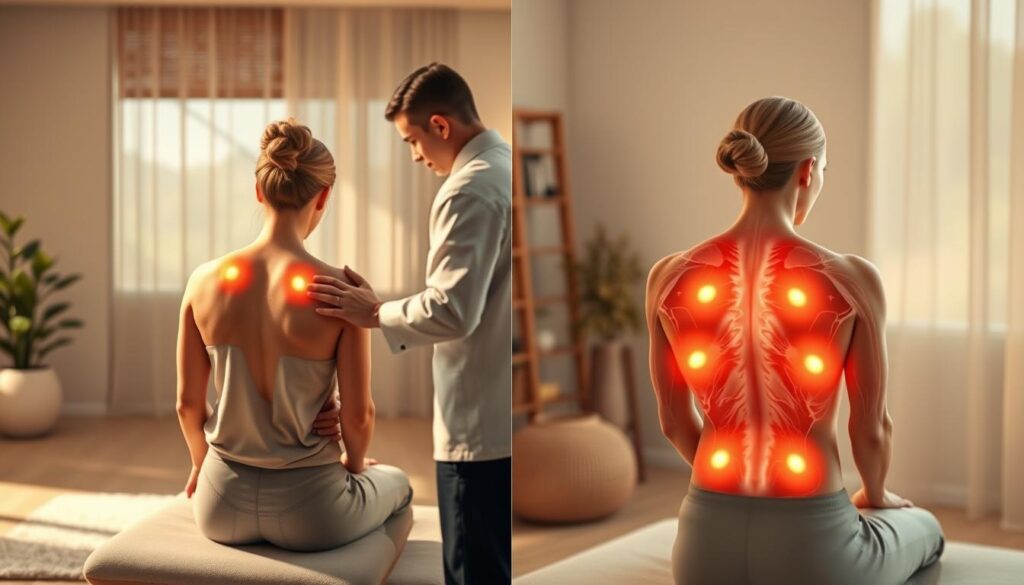
Your therapist will begin with a brief assessment of where your pain is located, how long you’ve had it, and what makes it better or worse. Cups are then placed across the affected areas of the back — typically the lower back, mid-back, and/or upper back and shoulders depending on your presentation. The suction is held for several minutes in each position, and your therapist may move the cups gradually across the area (gliding cupping) to address a wider range of tissue.
Most sessions include both static cupping and manual massage work to address different layers of the problem. The treatment is firm but should not be painful — a significant pulling sensation is expected, but if you feel acute pain, tell your therapist immediately so the suction can be adjusted.
Following the session, most clients experience a significant improvement in mobility and a reduction in aching within 24 to 48 hours. Mild tenderness or the appearance of circular marks on the skin are both normal and expected outcomes of cupping — the marks reflect areas of restricted circulation in the treated tissue and fade within a few days.
Combining Cupping with Deep Tissue Massage
For back pain with a mixed presentation — both fascial restriction and significant muscle tightness — combining cupping with Deep Tissue Massage produces more comprehensive results than either treatment alone. The cupping addresses the fascial layer and increases blood flow, and the deep tissue work then targets the muscle fibres that the improved tissue state makes more accessible.
Your therapist will advise whether a combined approach is appropriate in your case, and can structure a course of sessions accordingly. For more context on how these two treatments compare for different types of back pain, our cupping vs deep tissue massage guide covers the key distinctions in detail.
When to Seek Medical Advice First
Cupping is appropriate for the vast majority of common back pain presentations — muscle tightness, fascial restriction, postural strain, and general chronic aching. However, you should see a doctor before booking cupping if your back pain is accompanied by:
- Numbness, tingling, or weakness in the legs or feet
- Loss of bladder or bowel control
- Pain that follows a significant fall, accident, or trauma
- Fever or unexplained weight loss alongside back pain
- Severe pain that is rapidly worsening
These presentations require medical assessment before physical therapy of any kind.
Frequently Asked Questions
How is cupping different from massage for back pain?
Massage compresses the muscle tissue downward. Cupping lifts it upward. For fascial restriction — one of the most common causes of persistent, treatment-resistant back pain — the lifting action of cupping is often more effective because fascia responds better to decompression than compression.
How many sessions do I need for back pain?
For recent or mild back tension, one to two sessions often produces noticeable and lasting improvement. For chronic back pain that has been present for months or years, a course of four to six sessions over six to eight weeks is typically required to produce significant and sustained change.
Will the marks from cupping affect my ability to work or exercise?
The circular marks from cupping are cosmetic only — they do not restrict movement or indicate tissue damage. Most clients return to normal daily activity immediately after a session. Avoid intense exercise and direct heat (saunas, hot baths) for 24 hours following treatment.
- Cupping therapy: benefits, types and what to expect — Healthline
- Cupping: what the science says — National Center for Complementary and Integrative Health
Related Treatments at Pepper Leaf Studio, Nenagh
- Cupping Therapy (1 Hour) — decompressive cupping for fascial restriction and back pain
- Cupping Therapy (1.5 Hours) — extended cupping for more extensive back pain treatment
- Deep Tissue Massage (1 Hour) — compression-based deep tissue work for muscular back pain
- Chair Massage (30 Min) — quick targeted relief for the upper back and shoulders
Keep Reading
- Cupping Therapy in Nenagh: Benefits for Stress, Tension, and Recovery
- Cupping or Deep Tissue Massage: Which Is Better for Your Body Type?
- Back Massage in Nenagh: Deep Tissue and Chair Massage at Pepper Leaf Studio
Further Reading
- ↗NICE Guidelines NG59: Low Back Pain — NICE recommends non-invasive manual therapies — including cupping and massage — for non-specific low back pain.
- ↗Mayo Clinic: Cupping Therapy — Clinical overview of cupping — evidence for pain relief, muscle recovery and inflammation reduction.
- ↗NHS: Back Pain Treatment — NHS guidance on evidence-based treatments for back pain, including manual therapy and lifestyle approaches.
Try cupping therapy for your back pain in Nenagh
Book a 1-hour or 1.5-hour Cupping Therapy session at Pepper Leaf Studio and experience the difference decompression makes. View Cupping Therapy and book →