
Did you know over 70% of amateur athletes in Ireland face muscle imbalances? These issues stop them from getting better. Targeted manual therapy is key for top athletes to reach their best.
Already know what you want?
Book a deep tissue massage at Pepper Leaf Studio, Nenagh

We use deep tissue massage to meet the needs of active people. It helps you recover and train better. If you’re looking for sports massage near you, knowing how it works is a big step to better health.
Why Serious Athletes Need More Than Just Relaxation
Serious training needs a detailed approach to bodywork, not just relaxation. A spa treatment might relax you after a long week. But it doesn’t fix the mechanical issues from hard, repetitive movements. Choosing the best sports massage is key for athletes wanting to stay healthy and perform well.
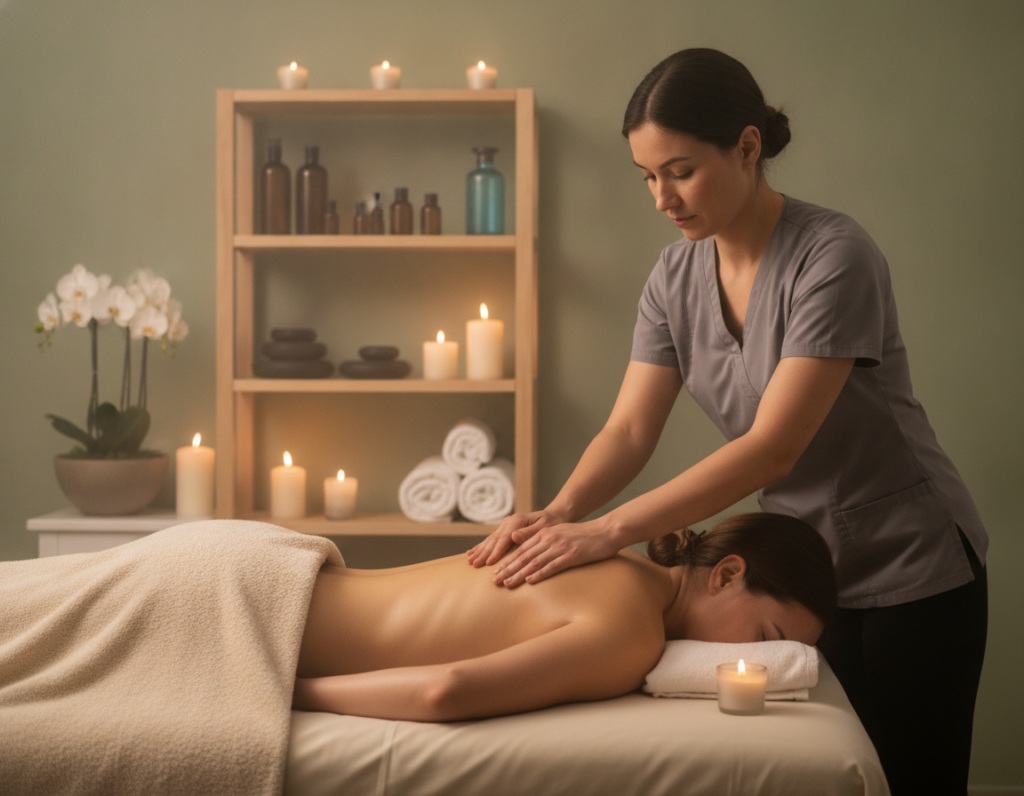
 deep tissue massage on a seated athlete, who is wearing comfortable sportswear. The therapist’s concentration and skilled hands convey the seriousness of the treatment. In the middle ground, a massage table with sports recovery tools like foam rollers and massage oils showcases the environment. In the background, soft lighting and calming wall colors create a serene atmosphere, emphasizing the importance of recovery in sports performance. The entire composition should evoke a sense of professionalism and dedication, highlighting why serious athletes need specialized care beyond simple relaxation.” data-method=”text-to-image”>
Distinguishing Between Pampering and Performance Therapy
Many athletes think all massages are the same. But, there’s a big difference between relaxing massages and ones for functional recovery. A professional sports massage finds and fixes muscle imbalances and tight tissues that slow you down.
Unlike spa massages, which focus on stress relief, sports therapy aims to improve how your body moves. It targets the main causes of tension. This keeps your body working at its best, helping you stay competitive.
The Physiological Demands of High-Intensity Training
High-intensity training is hard on your muscles and bones. It causes small injuries in the muscles, which is normal. But, without sports therapy, these injuries can turn into long-term problems like tight muscles and injuries.
When you train hard, your body has trouble getting rid of waste. A professional sports massage boosts blood flow. This helps get rid of waste faster and brings nutrients to tired muscles. Getting the best sports massage means your body recovers quicker, so you can train harder again.
| Feature | Spa Massage | Sports Therapy |
|---|---|---|
| Primary Goal | Relaxation | Performance/Recovery |
| Technique | General Effleurage | Deep Tissue/Fascial Release |
| Assessment | None | Biomechanical Analysis |
| Outcome | Temporary Calm | Improved Function |
Finding the Right Sports Massage Near Me in Nenagh
Finding the right therapist is key to a good training plan. When you look for a sports massage near me, you’re not just after a quick fix. You want a partner in your athletic growth. A good recovery plan needs someone who sees your body as a high-performance machine.

What to Look for in a Professional Sports Therapist
Choose therapists with sports therapy qualifications. They should know about your body’s mechanics and the stress of hard training. A top therapist will ask about your current load, past injuries, and future goals.
“The greatest wealth is health, and the greatest investment is in the maintenance of your own physical health.”
Find someone who does more than just massage. They should explain the why behind their methods. Good communication is key for a local sports massage expert who cares about your progress.
Why Local Expertise Matters for Your Training Cycle
Consistency is key for long-term success. Choosing a local sports massage in Nenagh makes it easier to fit in sessions. It’s simpler to add recovery to your busy schedule when your therapist is close.
Local experts know the area’s sports needs. They can adjust their sports therapy to fit your training schedule. This close support keeps you injury-free all year.
The Science of Sub-Fascial Work and Adhesion Release
True recovery goes beyond the skin. It reaches into the complex fascial network that supports every movement. Deep tissue massage is designed to penetrate these deeper layers. It unlocks your body’s true recovery.
This scientific approach is key for athletes. It helps them maintain a competitive edge in their sport.

Understanding the Fascial Network
The fascia is a thin, tough connective tissue. It wraps around your muscles, bones, and organs. Think of it as a living web that holds your structure together.
When this network is healthy, it glides smoothly. This allows you to perform at your peak.
But intense training can cause it to become dehydrated or restricted. This is where sports rehabilitation is vital. By targeting the sub-fascial layers, a therapist can restore the natural glide of your tissues.
This is often considered the best sports massage strategy for injury prevention.
How Breaking Adhesions Restores Muscle Function
Chronic training loads can lead to the formation of adhesions. These are small knots in the connective tissue. They act like internal brakes, limiting your range of motion and increasing the risk of strain.
When a skilled therapist applies precise pressure, they break these bonds. This restores optimal muscle function.
The benefits of this targeted release include:
- Improved blood flow to restricted muscle fibres.
- Enhanced neuromuscular communication between the brain and the muscle.
- Greater freedom of movement during high-intensity training.
- Reduced recovery time between demanding sessions.
By systematically addressing these hidden barriers, your body remains a high-performance machine. Embracing this level of sports rehabilitation lets you train harder and recover faster. This keeps you on the field or track for years.
Unlocking Your Potential Through Improved Range of Motion
True athletic ability comes when muscles move fully. Free joints mean better movement and grace. Professional sports massage helps remove barriers to your best.

The Link Between Flexibility and Power Output
Being flexible is key for maximising power in fast moves. Tension in muscles slows down movement. Good muscle length means more energy for performance.
Your body is like a top machine needing fine tuning. Soft muscles mean longer strides and more power. This efficiency makes athletes stand out.
Preventing Compensatory Injuries Through Targeted Release
Many athletes face issues from muscle imbalance. This can lead to serious sports injury treatment needs. Targeted release stops this before it’s too late.
Regular professional sports massage keeps muscles balanced. It stops injuries and keeps your body strong for sports.
Strategic Timing: When to Book Your Session for Peak Performance
Getting to peak performance is not just about hard work. It also needs a strategic approach to keeping your body in top shape. Your training schedule works best when you have good recovery times. Getting professional sports rehabilitation helps keep your body strong against tough training.
The Dangers of Pre-Race Deep Tissue Work
Many think a deep tissue massage before a race gives them an edge. But, it can actually make muscles tired. Your body needs time to adjust to the treatment. Starting a race with muscles that are too relaxed can make you slower.
“Recovery is not merely the absence of training; it is the active process of preparing the body for the next peak effort.”
If you need help just before a race, choose light massages or mobility work. Stay away from deep pressure that can cause inflammation or slow down your nerves. A mobile sports massage is a good option for light care at home.
Optimising Recovery Windows After Heavy Training Blocks
The best time for deep tissue work is right after a tough training session. Your muscles need fixing and relaxing at this time. By timing your sessions right, you let your body benefit from the treatment while resting.
Good sports rehabilitation is about regular care, not just when you need it most. Use the table below to plan your sessions based on your training schedule.
| Training Phase | Recommended Focus | Timing Strategy |
|---|---|---|
| Heavy Load | Deep Tissue Release | Within 24 hours post-block |
| Tapering | Light Flushing | 3-5 days before event |
| Competition | Rest & Mobility | Avoid deep work |
| Recovery Week | Maintenance | Mid-week session |
The Reality of Deep Tissue: Why Intensity is a Sign of Progress
Real progress in your body often feels uncomfortable. Choosing a deep tissue massage means you value long-term health over quick fixes. The pain you feel is a sign of healing, not harm.
Navigating the Threshold of Therapeutic Discomfort
It’s key to know the difference between good pain and bad. A professional sports massage should be a team effort. You should be able to tell your therapist when it’s too much.
Pepper Leaf Studio · Nenagh, Co. Tipperary
Ready to book your sports massage in Nenagh?
Deep tissue massage and cupping therapy available at Pepper Leaf Studio — targeted relief for muscle recovery, chronic tension and sports-related pain.
Here are tips to handle the intensity:
- Breathe deeply: Deep breathing calms your nerves, helping muscles relax.
- Communicate clearly: Tell your therapist if the pressure is too much.
- Stay present: Think about the muscle fibres lengthening, not the pain.
Why Your Therapist Needs to Reach Deep-Seated Tension
Deep muscle tension is hard to find. If your therapist only works on the surface, you won’t get better. They need to reach deep to fix you.
Letting your therapist work deep is an investment in your future. This professional sports massage helps your muscles recover. It means you’ll move better and stronger next time.
Managing Post-Treatment Soreness and the 24-Hour Rule
Many athletes worry about soreness after treatment. But, this feeling is often a sign of healing. It’s normal to feel a bit tender for up to 24 hours after sports injury treatment.
This soreness means your muscles are working hard to heal. Your therapist has helped them start this process.
Why Soreness is a Positive Indicator of Healing
When a therapist works on deep-seated tension, they help your body repair. This can cause a bit of inflammation. But, this is a natural part of the recovery cycle.
Seeing soreness as a positive sign can help. It shows your body is adapting to the treatment.
Staying consistent is key to success in training. Knowing that soreness is normal helps you stick to your recovery plan. Your body is working hard to get better, which is a crucial step toward improved performance.
Practical Tips for Managing Recovery After Your Appointment
To get the most from your sports injury treatment, follow these simple steps at home. These habits help your body recover well. Here are some tips for the 24 hours after your visit:
- Stay hydrated: Drinking lots of water helps your body get nutrients and remove toxins.
- Engage in light movement: Gentle walking or stretching helps prevent stiffness and keeps blood flowing.
- Listen to your body: If you’re very tired, rest instead of pushing through hard training.
Taking care of yourself after treatment is just as important. By following these tips, you’ll recover faster and stay strong.
When Deep Tissue Isn’t Enough: The Role of Cupping Therapy
Getting the best sports massage means trying new things. Sometimes, deep tissue massage isn’t enough. Embracing innovation in your recovery can unlock new levels of performance.
How Cupping Complements Deep Tissue Techniques
Cupping therapy lifts the skin and tissues away from the muscle. It’s different from deep tissue, which presses down. This suction-based approach boosts blood flow to stuck areas.
Together, cupping and manual therapy speed up healing. It makes tissues ready for deeper work. This synergistic relationship maximizes your table time.
Identifying When Your Body Needs Additional Modalities
Wonder if your current routine is enough? If knots return quickly or you can’t move as well, it’s time for a change. These signs mean your body needs the best sports massage with advanced techniques.
Pay attention if you feel “stuck” despite regular massages. Cupping can help you break through chronic tightness. Talk to your therapist about adding this to your recovery plan.
| Feature | Deep Tissue | Cupping Therapy |
|---|---|---|
| Primary Action | Compression | Decompression |
| Best For | Muscle Knots | Fascial Adhesions |
| Blood Flow | Increases locally | Draws to surface |
| Recovery Goal | Deep release | Tissue mobility |
Tailoring Treatment for Runners, Cyclists, and GAA Players
Your body tells a unique story through how you train. Recovery should match this uniqueness. Each sport puts different demands on your body, needing a special approach to sports therapy.
This tailored approach helps keep your body strong against training’s challenges.
Specific Focus Areas for Field and Endurance Sports
Different sports need different recovery focuses. Runners often face calf tightness, while cyclists need hip and glute work. GAA players deal with high-impact collisions and quick direction changes.
Here are common areas to focus on for recovery:
- Runners: Work on calves, hamstrings, and IT band to avoid overuse issues.
- Cyclists: Focus on hip flexors, lower back, and quads for better pedaling.
- GAA Players: Target shoulders, groin, and ankles for contact sport impacts.
Good sports injury treatment is more than fixing injuries. It’s about keeping your body balanced for your sport. The table below shows how we tailor our approach to your sport:
| Sport | Primary Focus Area | Goal |
|---|---|---|
| Running | Lower Limb | Injury Prevention |
| Cycling | Hip & Spine | Power Output |
| GAA | Full Body | Impact Recovery |
Adapting Techniques to Your Unique Training Load
Your training load changes with the season. Your recovery plan must change too. In intense training periods, use gentle, flushing techniques for blood flow. In off-seasons, deeper work can release adhesions.
Whether at our clinic or with mobile sports massage, our goal is to keep you performing well. We adjust pressure and speed to fit your fatigue levels, making each session effective.
Professional sports injury treatment is a team effort. Share your recent training to get the best sports therapy. Our mobile sports massage service brings care to you, fitting recovery into your busy schedule.
Investing in Your Longevity as a Local Athlete
True longevity in sport comes from regular, proactive care of your body. Many athletes focus on training hard. But the best ones know that recovery is the engine of progress. Taking care of your body as you do your workouts keeps your career bright and injury-free.
Viewing Recovery as a Non-Negotiable Part of Training
Seeing recovery as a must in your training is key for serious athletes. Adding sports rehabilitation to your weekly plan stops injuries and builds strength. This way, you can train harder without worrying about burnout or injury.
Being consistent is the secret to reaching your best. Don’t see rest as time off from goals. Instead, see it as a vital part of getting better. A good recovery plan helps your muscles heal, making you stronger for the next time.
Building a Sustainable Relationship with Your Therapist
We suggest you keep a long-term relationship with your therapist to keep your body in top shape. Finding a reliable sports massage near me is more than just a one-time fix. It’s about finding someone who knows your body and training well. Over time, your therapist becomes a key part of your journey.
A regular local sports massage provider can spot issues before they turn into injuries. This level of care is essential for athletes who want to perform at their best. By investing in your health, you’re choosing to focus on your long-term success.
| Strategy | Reactive Approach | Proactive Approach |
|---|---|---|
| Frequency | Only when injured | Scheduled maintenance |
| Focus | Pain management | Performance optimisation |
| Outcome | Short-term relief | Long-term durability |
| Relationship | Transactional | Collaborative |
Conclusion
Your body is like the engine for all your goals. Treating your muscles well makes training easier and better. It helps you reach your best.
Getting a local sports massage helps keep your body in top shape. It keeps your joints moving smoothly and your muscles strong. This way, you can stay ahead of the game.
It’s hard to remember to recover when you’re busy. But, a mobile sports massage comes to you. This makes taking care of your body easy and regular.
Make manual therapy a big part of your life. It helps you get stronger and last longer. Find a good professional in Nenagh to help you today.
Further Reading
- ↗PubMed: Massage and Delayed-Onset Muscle Soreness — Journal of Athletic Training study showing massage significantly reduces DOMS and perceived fatigue following intense exercise.
- ↗Mayo Clinic: Sports Massage — Is It Right for You? — When sports massage is beneficial, what it can and can’t do for recovery, and how often to schedule sessions.
- ↗NHS: Sport Injuries — Prevention and Treatment — NHS guidance on managing soft-tissue sports injuries, including the role of manual therapy and massage in recovery.
FAQ
Why is deep tissue massage considered the best sports massage for Nenagh athletes?
How does sports therapy differ from a regular relaxation massage?
What should I look for when searching for a sports massage near me?
Can sports injury treatment help prevent future issues before they start?
How does an improved range of motion impact my power and speed?
Is there a specific time I should avoid booking a deep tissue session?
Why is the intensity of a session often a sign of physical progress?
What is the significance of the 24-hour rule after a treatment?
When is it beneficial to incorporate cupping therapy into my routine?
How is treatment adapted for GAA players versus endurance runners?
Why is a long-term relationship with a therapist important for my athletic longevity?
Do you offer a mobile sports massage service for home recovery?
Massage at Pepper Leaf Studio
Pepper Leaf Studio · Nenagh, Co. Tipperary
Book your sports massage at Pepper Leaf Studio